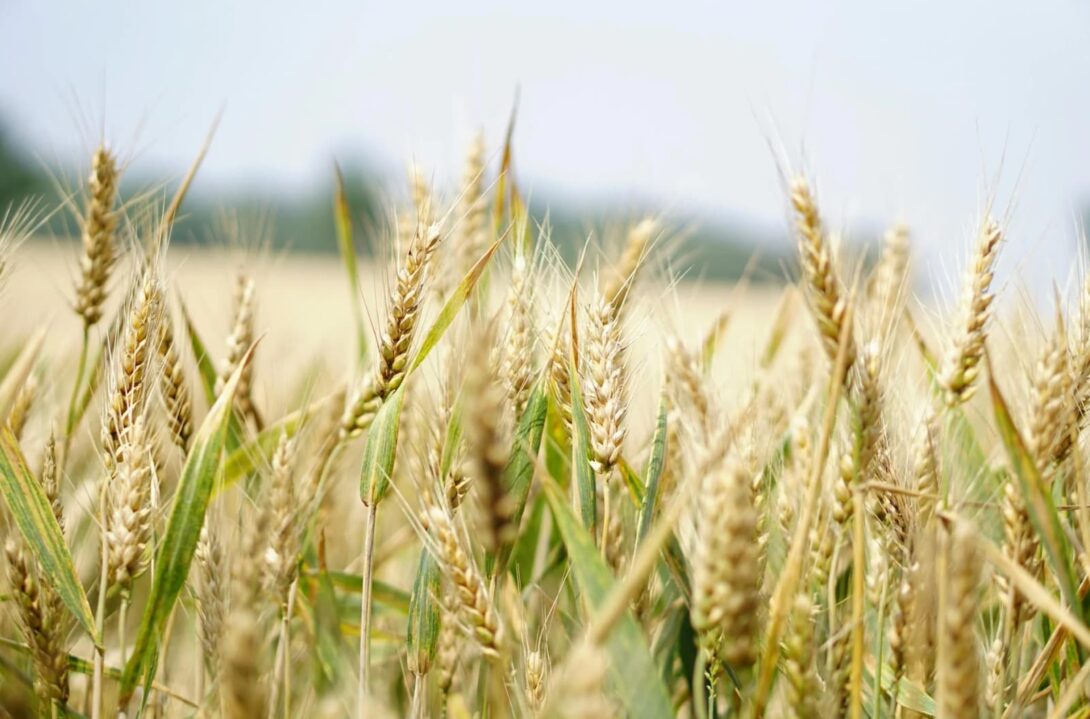
Plowing Through Theory: Academic Labor and Agricultural Metaphors in German Scholarship
Academic work and agriculture might seem worlds apart — one unfolding in libraries and lecture halls, the other in fields and barns. Yet, both share a deep connection to labor, patience, and cultivation. In the German academic tradition especially, metaphors of the land — Boden, Ernte, Acker, Frucht — have long described the intellectual process. Scholars “plow through” theories, “sow” hypotheses, and “harvest” results. This language is not accidental. It reflects a shared understanding of knowledge as something grown through effort, discipline, and care. Exploring how agricultural metaphors shape German scholarship reveals not only how academics imagine their labor but also how they experience its struggles, cycles, and rewards.
The Roots of a Metaphor
Agriculture and scholarship share a common logic of cultivation. In medieval Europe, monasteries were both centers of learning and farming. Monks copied manuscripts between harvests, and agricultural rhythms structured intellectual life. The German term Bildung — education or cultivation — retains this agrarian sense: to be “gebildet” (cultivated) is to have been nurtured, refined, and tended like a crop.
In the 19th century, when German universities became global models of research, this metaphor deepened. Thinkers such as Wilhelm von Humboldt and Johann Gottlieb Fichte imagined education as the development of inner potential, not unlike the germination of a seed. The university was a garden of minds; professors, its careful gardeners. Even today, in academic German, one “erarbeitet” (works out, literally “works off the earth”) a problem and “bearbeitet” (processes, cultivates) material. Knowledge, in this sense, is never simply found — it must be cultivated.
Plowing as Intellectual Labor
To “plow through theory” is a familiar expression to any student or researcher — an image of persistence through dense and difficult material. In German scholarship, theoretical engagement has long been associated with discipline and endurance. From Marx’s Kapital to Heidegger’s Being and Time, theoretical work is a kind of mental tilling, where concepts must be turned over repeatedly to reveal new meaning.
The metaphor of plowing also captures the bodily dimension of academic work. Reading, annotating, and writing are repetitive and sometimes exhausting acts. Just as the plow moves across the same ground, the scholar revisits texts, drafts, and arguments. Progress is slow, uneven, and sometimes invisible. In this sense, theory is not a detached intellectual exercise but a form of labor — Arbeit — grounded in time, rhythm, and persistence.
The Seasons of Scholarship
Agricultural metaphors remind us that knowledge production, like farming, follows seasonal rhythms. There are times of sowing (reading, brainstorming, designing research), times of growth (writing, collecting data), and times of harvest (publishing, defending, or presenting). German academic culture, with its structured approach to research — seminars, dissertations, Habilitationen — mirrors this cyclical pattern.
Yet, these cycles also include fallow periods. Not every season can be productive. German thinkers such as Theodor Adorno and Max Weber recognized this tension. Weber’s famous image of the scholar as someone who must persist through “slow, hard boring through thick boards” echoes the farmer’s patience with the soil. Progress in both fields requires endurance rather than inspiration.
The fallow season, often neglected in academic culture, is also vital. It is the time for reflection, reading without purpose, and letting ideas regenerate. In agriculture, fields must rest to remain fertile; in scholarship, minds must pause to think creatively. The metaphor reminds us that constant productivity — a demand increasingly present in modern academia — is unsustainable.
Fertility, Failure, and Renewal
German agricultural metaphors are not only about growth but also about loss. Fields fail, crops wither, and seasons disappoint. So too does research. Drafts collapse, arguments contradict, experiments fail. The German phrase rater une soutenance de thèse — to fail a dissertation defense — captures the emotional reality of such moments. Yet failure, in both farming and scholarship, is part of the cycle.
To plow through theory is to accept resistance — the stubbornness of ideas, the weight of tradition, the complexity of reality. The soil does not yield easily; neither does truth. But failure teaches resilience. The farmer learns to read the weather; the scholar learns to read theory differently. What matters is not avoiding difficulty but continuing to work with it, to replant, reframe, and rewrite.
This perspective aligns with the German philosophical notion of Wiederholung — repetition with transformation. As in seasonal labor, repetition in scholarship is not mere duplication but renewal. Each reading of Marx, each reinterpretation of Heidegger or Habermas, plows deeper into the intellectual ground.
The Political Landscape
Agricultural metaphors also reveal how scholars understand their place within larger systems. In Germany, both agriculture and academia are shaped by policy, funding, and institutional hierarchy. The neoliberal university, with its emphasis on output and competition, mirrors industrial agriculture’s demand for efficiency and yield. Scholars, like farmers, are pressured to produce more in less time, often at the expense of reflection and creativity.
Some German academics have critiqued this system using explicitly agrarian language. They describe universities as “intellectual monocultures” that suppress diversity of thought, or as “over-farmed fields” suffering from conceptual exhaustion. Against this backdrop, reimagining scholarship as sustainable cultivation — nachhaltige Forschung — becomes a form of resistance. To cultivate thought slowly, to let ideas mature, is an act of care in an over-harvested intellectual landscape.
Cultivating the Future
Ultimately, to “plow through theory” is to engage in an ancient, deeply human practice: transforming raw material into nourishment. In both farming and scholarship, the goal is not only production but sustenance — the feeding of communities, whether with food or ideas.
German scholarship, rich in metaphors of soil and growth, reminds us that intellectual labor is grounded, embodied, and interdependent. Theories do not grow in isolation; they need the weather of debate, the sunlight of critique, and the patient care of readers.
To be a scholar, then, is to be a cultivator — not of land, but of understanding. The field may be conceptual, but the work is real: hard, slow, and often invisible. And yet, it is precisely in this labor, in plowing through theory again and again, that something fertile endures — the promise that even in overworked soil, new ideas can still take root.